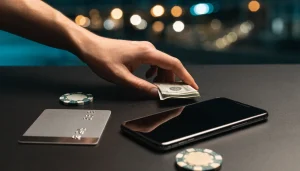
An e-wallet sits between your funds and the casino, so checking both transaction records can help distinguish a delay from an unauthorised payment.

An e-wallet acts as an intermediary between your money and a casino payment page. Instead of entering card details there, you select a wallet, sign in to that service and approve the transfer. MiFinity, Skrill and Neteller are examples used for both deposits and withdrawals. The wallet is a separate service, so a casino transaction and the movement of funds within the wallet are related steps, but they are not the same thing.
For a deposit, the process begins when you choose the wallet at the casino cashier and authorise the payment. The casino then has to register the transaction against your account. A successful authorisation does not, by itself, explain every delay: the payment can depend on the casino’s handling as well as the wallet’s processing. For that reason, it is useful to distinguish a payment that has not been authorised from one that has been authorised but is not yet showing in the casino balance. Check the transaction status in both places before attempting another transfer.
When choosing an online pokies site that accepts e-wallet payments in Australia, you should check the available payment and payout details as well as the operator information provided. Use these verdicts as a quick reference when deciding what to investigate further.
Roby Casino
Roby Casino is listed with a Curacao eGaming licence held by Roby Games Ltd.
MrPacho
MrPacho lists crypto payouts at 30–120 minutes and fiat payouts at 24–72 hours. Its minimum deposit is A$30.
Playfina Casino
Playfina Casino has been associated with a Curacao eGaming licence held by Hollycorn N.V. since 2017. Its minimum deposit is A$20–30, depending on the offer.
House of Pokies
House of Pokies lists PayID payouts at 1–24 hours and a minimum deposit of A$30, or A$10 when using PayID. Its source describes its licence as an international iGaming licence but does not name the jurisdiction.
Lucky Dreams
Lucky Dreams lists a Curacao licence and a minimum deposit of A$20 when using POLi.
GoldenCrown
GoldenCrown is listed with Curacao Gaming Control Board licence OGL/2023/176/0095, held by Hollycorn N.V.
SkyCrown
SkyCrown lists a Tobique Gaming Commission licence. Its stated payout times are around 10–15 minutes for crypto and 1–5 days for fiat, with a minimum deposit of A$30.
JeetCity Casino
JeetCity Casino is listed with a Curacao eGaming licence held by Dama N.V.
DragonSlots Casino
DragonSlots Casino is listed with a Curacao Gaming Authority licence held by Jumpman Gaming Ltd.
Uptown Pokies
Uptown Pokies is listed as operating under a Curacao licence since 2017. Its minimum deposit is A$20.
A withdrawal reverses the direction of the funds. The casino sends an approved payment to the e-wallet, after which the balance should appear in the wallet account. The casino may first hold a withdrawal as pending while it processes the request. That waiting stage is separate from the time the wallet takes to receive the funds; a short transfer time after release does not mean the entire withdrawal is immediate.
A specialist review reports that e-wallet withdrawals may arrive within 24 hours once the casino’s pending period has ended. Treat that as a reported processing window, not a promise that applies to every casino or transaction. The pending period can affect the total wait, and the time a casino releases a payment is not the same measure as the wallet’s transfer time. If the request remains pending, the funds have not yet entered the wallet’s processing stage.
This distinction helps when you are trying to work out where a delay sits. If the casino still labels the request as pending, contact its support team about the status of the withdrawal. If it says the payment has been sent, check the wallet’s transaction history and use the casino’s payment reference when asking for help. Avoid submitting repeated withdrawal requests simply because the balance has not appeared; first establish whether the original request is still being handled.
E-wallets can make it easier to keep casino transactions apart from everyday card activity, but they do not remove the need to understand how a particular payment is treated. The service may show a transfer as authorised, completed or received at different points in the process. Keep the relevant confirmation details, and compare the timestamps and status descriptions rather than assuming that two screens update at once. A record of the transaction can also make a support conversation more precise.
 Pokies Parlour Casinos in Australia: What to CheckLearn how “pokies parlour” differs from a licensed casino, why approval depends on the state or territory, and what to verify in…
 $5 Minimum Deposit Casinos in Australia: Payment RulesLearn why a casino’s $5 minimum may not apply at checkout, and how the selected payment method can set a higher deposit…
The wallet balance is not the same as a casino balance. Funds may need to move from the wallet to the casino before they can be used there, and a withdrawal must move back through the payment route before it is available in the wallet. Do not assume that selecting a wallet for a deposit automatically means that every later payment will follow the same path. The way withdrawals are handled can vary between operators and is a separate condition to understand before relying on a payment route.
The casinos discussed in this context are offshore and crypto-friendly; that description is not an endorsement or a guarantee of payment. An e-wallet’s presence in a cashier does not establish that a casino is suitable for you, nor does it assure that a withdrawal will be approved or arrive on a particular schedule. If you are considering an offshore casino, be aware that there is no Australian government body to complain to if it refuses to pay winnings.
For a punter comparing e-wallet pokies payment options, the practical point is to separate the stages: authorisation, the casino’s handling of a deposit or withdrawal, any pending time, and the wallet’s receipt of released funds. A quick wallet transfer can only describe one part of that sequence. Keep expectations tied to the status shown for the transaction, rather than treating an advertised or reported processing window as a guarantee.
Attention: An e-wallet's presence in a cashier does not guarantee that a casino is suitable for you or that a withdrawal will be approved on a specific schedule.
For mobile access, the browser is generally the starting point. Many casinos serving Australian users make their sites available through a phone or tablet browser, and you can sign in with the same account you use on a desktop computer. That means there is no separate mobile profile to create simply because you switch devices. If you have trouble signing in, first check that you are using the correct account details and that the page has finished loading before trying again.
A browser-based page can be saved to your home screen as a Progressive Web App, or PWA. This is a shortcut to the casino website designed to behave more like an app: tapping its icon opens the site in a mobile-friendly view. It does not necessarily mean that a separate program has been installed from an app store. The distinction matters if you are trying to understand what is on your device and where it came from.
If the site offers a PWA, open it in your mobile browser and look for an installation prompt or an option to add the page to your home screen. Tap that option, then confirm when your device asks whether to add it. The wording and location of the prompt can differ between browsers and devices. If it does not appear, look in the browser’s menu for an add-to-home-screen option; if there is no such choice, you can continue using the site directly in the browser.
Once added, the icon is a convenient route back to the website, rather than proof that the operator has a native app. If the shortcut stops opening correctly, remove it and return to the site through your browser. You can then add it again if the installation prompt is available. Avoid assuming that an icon with the operator’s name is genuine: check that it was created from the operator’s own website and that its destination is the expected page.
Native casino apps are uncommon in the Australian app stores. Google Play and Apple’s App Store rarely list casino apps for this market, so a browser page or a PWA is more likely to be the available mobile route. That can be less familiar if you are used to installing every service through an app store, but it does not mean you need a special app to access an account.
Be cautious if a site asks you to download an app file directly and install it outside the usual app store process. That is called sideloading. An app installed this way has not passed through the same store route, and its security depends on the operator and the file being offered. Do not install it simply because a page says it will improve performance. If you cannot establish that the download genuinely comes from the operator, use the browser instead.
Mobile problems are not always caused by the casino site. A specialist review identifies weak internet connections, limited available memory, an outdated browser and too many apps running in the background as possible causes of trouble. These can show up as a page that takes a long time to open, controls that stop responding, or a session that reloads unexpectedly.
Start with the simplest checks. Move to a steadier connection if you can, close other apps you are not using, and reload the page. If the browser has been open for a long time, close it fully and reopen it. Check whether an update is available for the browser and install it through your device’s normal update process. These steps can help distinguish a device or connection problem from an issue with the site itself.
If the page works on one connection but not another, the connection may be the cause. If it fails only in one browser, try another browser already installed on your device. Do not repeatedly submit a form or tap a control when the page appears frozen; wait for it to respond, then check what has happened before trying again. Repeated actions can make it harder to tell whether the original request completed.
Keep the browser open while using the site, particularly if switching between apps causes it to refresh. Phones with little free memory may close background pages, and returning to a reloaded session can interrupt what you were doing. If a problem persists after the basic checks, contact the site’s support team with your device type, browser and a plain description of the issue. Avoid sending passwords or other private sign-in details in a support message.
For a straightforward mobile setup, start in the browser, use the same account you use on desktop, and add a home-screen shortcut only if the site offers one. Treat a PWA as a convenient doorway to the website, not as a guarantee that every mobile problem will disappear.
An e-wallet appearing on a cashier page does not tell you whether it can be used for a withdrawal. Before depositing, check the casino’s transaction rules as a whole: which methods accept deposits, which can pay out, what identity checks apply and whether a withdrawal ceiling could affect you. These details matter more than seeing a familiar payment logo.
Some casinos allow deposits through an e-wallet but do not permit withdrawals to it. Others require you to withdraw through the same method used to deposit. A specialist review describes these rules as varying between casinos, so do not assume that a method supported for one transaction will work for the other.
Read the cashier information and the withdrawal terms before moving money. Look for separate labels such as “deposit” and “withdrawal,” and check whether the rules change when more than one payment method is used. If the wording is unclear, ask customer support to confirm the withdrawal route in writing before you deposit. Keep a copy of the reply and the terms you relied on; this gives you something specific to refer to if the cashier later shows a different option.
This check is relevant whether you are considering MiFinity, Skrill or Neteller. A familiar e-wallet name is not a promise that every casino will accept it for both directions of a transaction. Nor does an available deposit button establish that the operator will send winnings to the same wallet. If the casino’s terms say a method is deposit-only, treat that as a material restriction, not a minor detail.
A first withdrawal commonly triggers know-your-customer checks. The casino may ask you for a selfie or identity document and proof of your address. Check the verification instructions before depositing so you know what documents may be needed and how they must be submitted.
Make sure the details on your account are accurate and consistent with your documents. Differences in a name or address can lead to follow-up requests, and an unclear or incomplete image may need to be sent again. Use the casino’s stated secure upload process rather than sending sensitive documents through an unverified channel. If you are asked for additional information, read the request carefully and provide only what the operator requires through its designated process.
Verification can affect when a withdrawal is handled, so it is sensible to understand the steps before you rely on receiving funds by a particular date. Do not assume that a withdrawal request will be processed immediately simply because your account let you deposit. The important practical question is what the operator requires from you, and whether you can meet those requirements if asked.
Some casinos set weekly or monthly withdrawal limits. A specialist review reports that limits can fall in the range of $4,000–$10,000 per week, but the applicable figure depends on the casino’s own terms. Check the current cashier or withdrawal rules rather than treating that range as a promise about any particular site.
Find out whether the limit applies to all withdrawals combined or to each payment method, and whether a monthly ceiling also applies. Check how the casino handles a balance above its stated limit: the terms may affect when the remainder can be requested. If the rules use different limits for different account categories, confirm which category applies to you instead of relying on a general page or an old review.
A withdrawal cap can matter even when the e-wallet itself is working properly. It may shape how much can be sent within the stated period, so consider the practical effect before you deposit. If the operator does not clearly explain the limit or how it is applied, do not fill in the gaps with assumptions.
Before making a deposit, save the relevant terms and any written answer from customer support. Include the page describing supported withdrawal methods, verification requirements and limits. Terms can change, and a record helps you distinguish what you saw at the time from what appears later.
Treat a vague answer as unresolved rather than as confirmation. You should be able to identify the withdrawal method available to you, the documents that may be requested and the limit that applies. If any of those points remains uncertain, pause before depositing. Checking these conditions in advance will not remove every possible delay, but it can help you avoid discovering a basic restriction only after requesting a withdrawal.
When comparing AUD payment options, separate the time a deposit takes to appear from the time a withdrawal takes to reach you. They are different stages, and a method that is quick for adding funds may not be offered for cashing out. Payment options and processing times can also vary between offshore services, so check the stated terms before making a transaction.
A specialist review describes PayID deposits as near-instant and typically free. Treat that as an indication reported by that type of source, not a promise that every payment will arrive immediately or cost nothing. The receiving service’s instructions and your bank’s handling of a particular transaction still matter. If the deposit does not show, check whether the payment has left your account and whether the service displays it as pending before trying again. Repeating a payment without checking could create duplicate transactions.
POLi shut down its Australian operations in September 2023 and is no longer a working option for Australian transactions.
Specialist reviews also describe PayID, BPAY, cards and cryptocurrency among the methods that may be offered for mobile deposits, with processing times differing by method. That should not be read as a current guarantee that every option is available wherever you are, or that it can also be used for a withdrawal. Confirm the options shown on the payment page and read the conditions attached to the method before sending money. Do not assume that an option mentioned in general information will appear for your account.
POLi requires particular care because it is no longer a working option for Australian transactions. POLi shut down its Australian operations in September 2023 and stopped processing local payments. If you encounter an old page or payment guide that still lists it, do not treat that listing as evidence that you can use it. Check the current payment screen instead, and do not send money through an alternative route unless the service clearly identifies and explains that route.
A failed card payment does not necessarily mean that the account details were entered incorrectly. A specialist review notes that some Australian banks block or flag gambling-related card charges, which can lead to a deposit being declined. The bank may be able to tell you whether it rejected the transaction; the casino’s payment page may show only that it failed. Avoid repeated attempts while the reason is unclear, since further attempts may also be rejected.
If a charge appears in your bank account but the deposit is not credited, keep the transaction record and contact the relevant payment provider or service through its stated support channel. Check whether the entry is a completed charge or a temporary pending transaction before treating it as settled. If the card is declined, do not assume that changing small details or making repeated attempts will resolve the issue. Use only a method the service currently presents and that you are authorised to use.
A withdrawal can take longer than a deposit because the casino must process the request before the payment provider handles it. Allow for any pending period stated by the service, then consider the payment route’s own timing. A specialist review reports that bank-transfer withdrawals can take as long as five business days. That is a reported processing window, not a guaranteed arrival time for every transfer. Weekends and public holidays can also make it harder to judge when a business-day period has elapsed, so use the service’s own status information rather than assuming that a delay means the money has been lost.
Before requesting a withdrawal, check that the selected route is actually available for payouts and that the details are correct. A deposit method should not automatically be assumed to support withdrawals. If a transfer is delayed beyond the period stated by the service, save the request confirmation and any payment reference, then ask support to identify whether the request is still pending or has been sent. Keep communication factual and retain copies of relevant messages.
For AUD deposits, the useful question is not simply which method sounds fastest. It is whether the option is currently available to you, what the service says about its processing, and whether the same route can be used when withdrawing. PayID’s reported speed and cost, the closure of POLi, card declines and bank-transfer delays all point to the same practical caution: verify the live payment details before acting, and do not treat an old listing or a general claim as a guarantee.
An unfamiliar offshore crypto-friendly casino can look polished and still leave important questions unanswered. Before you create an account or deposit, check whether the site accepts people located in Australia. Look for a clear statement in its terms or access rules, rather than relying on the fact that its pages load or that a payment option appears. A site being visible does not establish that it accepts your location.
If the terms are unclear, ask the operator through its stated support channel and keep the response. Check that the answer addresses Australian residents specifically, not just a broad claim that the casino serves international customers. If the site says it does not accept your location, do not try to get around that restriction. If it accepts you, read the remaining conditions before proceeding; acceptance by the operator does not remove the practical risks of using an offshore service.
Find the licensing details on the site, often in its footer or terms. Common jurisdictions named by casinos that accept Australians include Curaçao, Malta, and Gibraltar. The Malta Gaming Authority is a regulator, while the other names may be presented as licensing jurisdictions or authorities; check what the site actually says rather than treating a place name as proof on its own.
Look for a specific licence statement and identify which company it applies to. A logo or a line of text is not enough to establish that the licence belongs to the operator you are considering. If the details are difficult to find, vague, or inconsistent across the site, treat that as a reason to pause. Do not assume that an offshore licence gives you the same protections or complaint options as a service regulated in Australia.
Also separate the question of licensing from the question of access. A site may describe its licence while still being blocked for Australian users. The Australian Communications and Media Authority (ACMA) works to prevent access to gambling sites that are illegal under Australian rules. A page failing to load may therefore reflect an access restriction, not a temporary fault that you should try to bypass.
A VPN can make it appear that you are connecting from somewhere else, but that does not change the operator’s rules or remove the block. Trying to reach a restricted casino this way may breach its terms. The operator may void winnings or close your account if it determines that you used a VPN to access the service.
That risk can arise after you have already played, which is why a successful sign-up or deposit should not be treated as proof that the arrangement is permitted. Do not provide false location details or use another person’s account to work around a restriction. If access is blocked, stop and seek clarification from the operator rather than testing different connections.
No Local Redress
If an offshore casino refuses to pay winnings, there is no Australian government body you can turn to for a complaint.
Some offshore casinos may offer an app file for installation outside the Google Play Store or Apple App Store. Installing such a file yourself is called sideloading. It does not carry a single, uniform level of safety: the risk depends on the operator and on the file being offered. You cannot assume that an app is safe merely because it uses the casino’s name or logo.
Before installing anything, check that the download is linked from the operator’s own site and review its permissions. Be cautious if the app asks for access that does not seem necessary for its stated function. If you cannot establish where the file came from or who is responsible for it, do not install it. Browser access avoids the need to install an app file, although it does not resolve questions about whether the casino accepts your location.
Keep your account credentials private and avoid saving them on a device you do not control. If an installation or login behaves unexpectedly, stop rather than entering further personal information. An unfamiliar operator’s support response can help explain a technical issue, but it is not an independent safety check.
Take time to check the site’s location rules, identify its licensing claim, and understand any access restriction before depositing. The casinos discussed in this context are offshore and crypto-friendly; that description is not an endorsement or a guarantee of protection. If an offshore casino refuses to pay winnings, there is no Australian government body you can turn to for a complaint against it. Consider that consequence before trusting the site with money or personal details.
Australian law draws an important distinction between the person using a casino service and the operator providing it. Under the Interactive Gambling Act 2001, an operator must not offer real-money online casino-style games to people located in Australia. That includes pokies and other casino games. The prohibition is directed at the service provider; the Act does not make it illegal for an individual Australian to play at an offshore mobile casino.
That distinction should not be mistaken for a guarantee of protection. A service can be prohibited for an operator to provide in Australia while remaining accessible to a punter through an offshore business. The operator’s legal position and your practical position are not the same thing: if a dispute arises, you may have little meaningful help available locally.
The casinos discussed in this context are offshore and crypto-friendly. They are not Australian-licensed casino services, and their availability does not mean they are approved or supervised by Australian authorities. The legal status of the operator does not establish that a particular site is reliable, that it will honour its terms, or that you can recover funds if something goes wrong. Avoid treating an offshore service as though it has the same local protections as a regulated Australian financial product.
Age is a separate requirement. You must be at least 18 to register and gamble in Australia. A site’s willingness to accept a registration does not remove that requirement. Do not use another person’s details or misstate your age to get around an account check; doing so can create further problems with access to the account and any funds held in it.
The most consequential risk for many people is what happens after a disagreement. If an offshore casino refuses to pay winnings, there is no Australian government body you can complain to that can require the operator to pay. Australian authorities do not provide a local casino-claims service for disputes with an offshore business. You may find that the operator’s own complaint process is the only route it offers, and a response from that process is not the same as an enforceable local remedy.
This matters before you create an account, not only after a withdrawal is disputed. Consider whether you could accept the possibility of losing access to money tied up with a business outside Australia, with no Australian government agency able to resolve the payment dispute for you. Do not assume that the legal position of the operator gives you a straightforward way to recover funds.
There is also a difference between not being criminally liable as an individual under the Interactive Gambling Act 2001 and having a dependable legal remedy against an offshore operator. The first point does not make the service lawful for the business to offer to Australians, nor does it turn the operator into a locally accountable provider. Keeping those points separate helps you assess the risks without confusing a rule aimed at operators with a promise of consumer protection.
If you are unsure what a site’s legal status or terms mean, pause before registering or sending money. A casino’s wording about its location or licence cannot create Australian oversight where none exists. Treat the lack of a local complaint body as a real limitation, rather than assuming that a dispute can be handled like one with an Australian business.
A no-deposit offer can sound straightforward: receive bonus credit without making an initial deposit. That headline does not tell you whether the credit can become withdrawable. The conditions attached to it decide what you must do, which games count and whether any resulting balance can be paid out.
Start with the wagering requirement. It sets the amount of qualifying play required before bonus funds or winnings can be withdrawn. A specialist review describes welcome-bonus requirements in the 30x–50x range and treats requirements above 40x as steep. Those figures are context, not a promise about any particular offer. Check what the multiplier applies to: the bonus, the deposit, or a combined amount. That distinction changes the work required to clear it.
Next, read the game restrictions. Terms may limit which games contribute to wagering, or exclude some altogether. Do not assume that every game contributes equally, or that play on your preferred game will count. If the rules are unclear, the offer’s headline cannot resolve that uncertainty.
Check the expiry date and the time allowed to meet the requirement. A specialist review reports that many bonuses have a seven-to-ten-day clearance window, with the bonus lost if the deadline is missed. Treat that as a reported pattern, not a rule for every offer. Make sure you can understand the deadline and conditions before accepting the credit; otherwise, the offer may create pressure to keep playing.
A no-deposit offer may still come with a minimum deposit condition before withdrawal. Confirm whether you must deposit to claim the offer, to unlock a cashout, or to meet another term. Also look for a cashout cap: a cap can limit the amount payable from bonus play even after you have met the wagering requirement. Check whether the cap applies to winnings, bonus funds, or both.
Read the full terms before claiming, including wagering requirements, game restrictions, expiry dates, minimum deposits and cashout caps. A bonus that cannot be cleared within its conditions is not useful just because it requires no initial deposit. Specialist reviews identify wagering, deposit conditions and time limits as key factors in assessing an offer, but the operator’s written terms determine what applies to that offer.
These terms relate to offers at offshore crypto-friendly casinos, not a recommendation to use them. If an offshore casino refuses to pay, there is no Australian government body for you to complain to.
There is no guarantee that an offshore casino is safe or will pay your winnings. If an offshore casino refuses to pay, you have no Australian government body to complain to.
The Interactive Gambling Act 2001 prohibits operators from offering online casino-style games to people in Australia, but it does not make it illegal for individual Australians to play at offshore casinos.
No. You can usually play through your mobile browser using the same account as on desktop. Some sites also offer a PWA shortcut that can be added to your home screen.
Yes. Casinos serving Australian players are generally accessed through a mobile browser, and you can sign in with your existing account.
Crypto and e-wallet withdrawals are typically processed in under 24 hours, but an e-wallet withdrawal may arrive within 24 hours only after the casino’s pending period ends. Check the withdrawal status with the casino and then the wallet.
Yes, individual Australians are not prohibited from playing at offshore mobile casinos under the Interactive Gambling Act 2001. The Act prohibits operators from offering online casino-style games in Australia.